Why Vaccination Is Important

February 4, 2023

Everyone needs vaccines, whether infants, children, teenagers, or adults. Even though vaccines are effective, some people are reluctant to get vaccinated. Read on to learn the facts about vaccination and the vital role it plays in protecting communities.

Vaccine-Preventable Diseases Are Still Out There

Vaccine programs help keep preventable diseases to a minimum. Diseases like measles, diphtheria, and polio are common in other parts of the world. These diseases can come into a country through international travel.

For instance, 2018 saw a global reemergence of measles due to low immunization in certain countries or regions. According to the WHO, the low vaccination rates were the root cause of the outbreak. You can easily acquire vaccine-preventable diseases without even traveling. You should protect yourself and your loved ones from preventable diseases through vaccinations.

Vaccines Help Reduce Antibiotic Use and Antimicrobial Resistance (AMR)

Antibiotic resistance happens when viruses and parasites change over time and no longer respond to medicines. Antimicrobial resistance (AMR) makes it increasingly difficult to treat diseases, increasing the risk of spread.

Vaccines reduce the risk of transmitting and acquiring resistant microbes, reducing the antibiotics you may use. By reducing the number of infections, a vaccine effectively minimizes the possibility of a pathogen mutating into a drug-resistant form.

Vaccines Are Safe

Vaccine safety is a high priority. Public knowledge of vaccine safety is essential, from development to availability. The CDC conducts safety activities in four activities, namely:

  • Vaccine Adverse Event Reporting System (VAERS)
  • Clinical Immunization Safety Assessment (CISA) Project
  • Vaccine Safety Datalink
  • Emergency Preparedness for Vaccine Safety

The office monitors vaccine safety to ensure they are as safe as possible. The CDC performs high-quality safety research and helps experts learn about preventable risks. However, vaccines can have minor side effects, such as fever and body aches that usually go away after a few days.

Vaccines Enhance Social and Economic Equity

At a personal level, vaccinations keep you healthy but could also mean the difference between life and death. Infectious diseases burden disadvantaged populations more, leading to high infant mortality rates and reduced quality of life.

Vaccines have a lasting impact on welfare, jobs, public debt, and human improvement in a community. The UN estimate that low-income countries missed out an addition of $38 billion to their GDP forecast in 2021 because of vaccination inequity.

This figure underscores the importance and access to vaccination in developing countries in driving social and economic developments.

Vaccination Helps Protect Others Too

When a community gets mass immunization, it's not only the vaccinated that are protected. People around vaccinated individuals also acquire herd immunity. A community with many vaccinated people makes it harder for a disease to spread in the event a preventable disease strikes.

Heard immunity benefits vulnerable individuals in society who, for some reason, may not be able to take a vaccine, including:

  • Babies who are too young
  • People receiving cancer treatment
  • Elders with poor immune systems

Herd immunity depends on the immunization rate in a community. Measles, for instance, requires a community to have an immunization rate of 95% to achieve community immunity. It's, therefore, essential to keep the vaccination high to protect your entire community.

Vaccines are a vital component of public health, helping to prevent the spread of infectious diseases and protecting individuals from serious illnesses. However, occasionally vaccines can cause injury or adverse reactions in some individuals. In such cases, a vaccine injury claim lawyer can help navigate the complex legal claim process and advocate for the rights of the injured party.

For an assessment of whether you have a valid vaccine injury claim, feel free to contact Vaccination Injury Lawyers today.
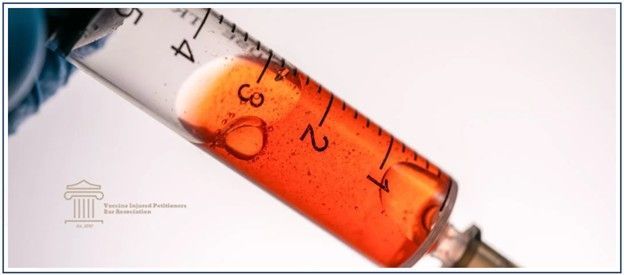

Close-up of a syringe filled with an orange liquid, held by a gloved hand, against a white backgroun
January 8, 2026
The Vaccine Injured Petitioners Bar Association (“VIP Bar”) is a national, nonpartisan organization of attorneys who represent individuals and families seriously injured by vaccines and who rely on the Vaccine Injury Compensation Program (“VICP”) for legal compensation for their pain and suffering, medical expenses, future medical care, and lost wages. The VIP Bar strongly supports safe, effective, and evidence-based vaccination schedules as a cornerstone of public health. At the same time, the VIP Bar unequivocally opposes the Centers for Disease Control and Prevention’s recent decision to revise the childhood and adolescent immunization schedule by changing routine recommendations for Hepatitis A, Hepatitis B, influenza, meningitis, rotavirus, respiratory syncytial virus (RSV) and COVID-19 vaccines. This change was not properly vetted by The Advisory Committee on Immunization Practices (“ACIP”) or supported by newly published safety or efficacy data, nor was it grounded in any emerging scientific consensus, rendering the decision both unjustified and deeply concerning. The CDC’s role in public health is to promote disease prevention and transmission reduction through clear, consistent, and science-driven vaccine recommendations. Removing or materially altering routine recommendations sends a confusing and destabilizing message to parents, providers, and the public, regardless of whether those vaccines remain technically “available.” Recommendation status matters. It influences uptake, confidence, and trust in the entire immunization framework. Abrupt changes that are untethered from new evidence risk undermining public confidence and trust not only in the affected vaccines, but in the CDC’s immunization guidance as a whole. The most immediate and severe consequences of this decision will be borne by future vaccine-injured individuals and their families. The Vaccine Injury Compensation Program, established through bipartisan congressional effort, exists to ensure that those who suffer rare but serious vaccine injuries have access to timely, no-fault compensation while preserving broad immunization coverage. By changing routine recommendations, the CDC jeopardizes access to this essential legal safety net. With further erosion of the recommended immunization schedule, families whose children are injured by these vaccines could find themselves excluded from the VICP altogether, left without meaningful recourse for lifelong medical needs, disability, and pain and suffering. Contrary to some public narratives, pushing vaccine-injured individuals into civil litigation is not a viable alternative to the Vaccine Injury Compensation Program. Civil courts operate under strict evidentiary and procedural rules that do not apply in Vaccine Court, including heightened liability and causation standards and rigid admissibility requirements that would, in most cases, foreclose recovery altogether. Vaccine injury claims litigated in civil court would also be forced into protracted multidistrict litigation, where cases routinely take 10 years to litigate without any reasonable expectation of compensation to the injured victims. The experience of recent vaccine-related multidistrict litigations underscores this reality. Litigation involving Zostavax, the shingles vaccine, has been pending for approximately seven years, and litigation involving Gardasil, the HPV vaccine, has been ongoing for roughly five years since the earliest cases were filed, with more than three years spent in centralized multidistrict proceedings. In both litigations, the overwhelming majority of cases have been dismissed on legal and evidentiary grounds, with no global settlement and no meaningful compensation paid to injured claimants. These outcomes demonstrate that while potentially appropriate/necessary in certain circumstances, overall, limiting vaccine injury claims to the slow, unforgiving and expensive forum of civil litigation will mean no relief for the vast majority of vaccine-injured individuals. The CDC should be strengthening and expanding evidence-based vaccine recommendations where science supports them, not withdrawing long-standing protections without justification. Public health challenges continue to evolve, and ongoing threats such as influenza, RSV, pneumonia, and meningitis demand rigorous evaluation and clear guidance. Retreating from established recommendations for vaccines long relied upon by families and providers represents a step backward at a time when public health leadership is most needed. This action also represents an early and troubling step toward undermining the Vaccine Injury Compensation Program itself. The VICP is a foundational component of the nation’s vaccination framework, balancing widespread immunization with fairness to those harmed in service of the public good. Weakening this program will predictably increase vaccine hesitancy, decrease vaccination rates, and heighten the risk of outbreaks of once-preventable diseases. The United States’ public health vaccination policy cannot reach its full potential without a robust federal compensation program—namely, the Vaccine Injury Compensation Program—to address the rare but serious adverse events that can result from vaccines. Equally concerning is the CDC’s reclassification of several vaccines from “recommended” to “shared clinical decision-making,” a change that carries no meaningful clinical benefit but could lead to devastating legal consequences. Shared decision-making has always existed in medical practice. Even under routine CDC recommendations, physicians and patients regularly discuss individual risks, contraindications, and medical history before vaccination. This rebranding does nothing to improve patient care or informed consent, yet may dramatically undermine access to the VICP. HHS has helped no patients with this move and further action may strip future vaccine-injured individuals of access to real compensation. VIP Bar urges the CDC and the Department of Health and Human Services to reconsider this course, to reaffirm their commitment to evidence-based policymaking, and to preserve the integrity of the Vaccine Injury Compensation Program. Public health and justice are not competing values. They are inseparable. The United States’ public health vaccination framework cannot function effectively without a durable, transparent compensation system—namely, the Vaccine Injury Compensation Program—that ensures those rare individuals who are injured are cared for while the broader population remains protected. 
A car key , handcuffs , and a glass of alcohol on a white background.
By Admin November 7, 2024
Explore Texas DWI laws, including legal BAC limits, penalties for first-time and repeat offenses, and the consequences of refusing a breath or blood test. Learn about enhanced penalties for high BAC levels, the importance of ignition interlock devices, and rules for driving with a child passenger. This guide highlights the critical details you need to stay informed about Texas DWI regulations and potential legal repercussions.
A Man Is Sitting At A Desk With A Scale Of Justice In The Background — Memphis, TN — Vaccine Injury
July 25, 2024
Navigate the appeals process with confidence using our top tips. Learn about filing appeals, preparing records, and understanding court decisions to effectively manage your case.
May 16, 2023
You may have heard that Autism Spectrum Disorder can result from vaccinations. Read this blog to learn where this myth came from and why it's incorrect.
March 28, 2023
If you're expecting a child or planning a pregnancy, you may be wondering if and why the COVID-19 vaccine may be recommended. Read to learn all about it.
January 24, 2023
Shoulder injuries following all types of vaccinations are becoming more common as vaccination numbers remain high. Inflammation of the injected shoulder can cause severe pain, limited motion, and other symptoms that last months or years. Sometimes, surgery is even required. Compensation for these specific injuries is available. For a more in-depth analysis of what a SIRVA is and how it occurs, check out the following article. Click Here .
By Admin November 22, 2022
With technology taking center stage in the medical industry, vaccines help to protect billions. Learn about the common vaccine types in existence today.
By Admin November 7, 2022
Estate planning with Alzheimer's or dementia can be challenging, especially as the condition progresses. See some tips to help if you are in this situation.
By Admin September 21, 2022
Every year, a percentage of individuals develop Guillain-Barré Syndrome (GBS) after getting the flu vaccine. Learn about this illness and its vaccine link.
By Admin July 28, 2022
Some parents question if the shot is worth it and safe. Read on to learn about chickenpox vaccine safety and what to do in case of side effects.